03 / Future operations
Support that acts
before it escalates.
DDTech's future operating model automates first-line network and ICT support so a focused team can serve a defined market without payroll rising at the same rate as routine support work.
The operating challenge
Service companies traditionally
scale people with customers.
As a conventional ICT provider grows, ticket volumes rise, more technicians are required and salary expenses tend to grow alongside revenue. DDTech is being designed to change that relationship by placing automation at the first line.
CustomersGrowing
Support volumeFollows growth
Salary pressureMore headcount
CustomersGrowing
AutomationAbsorbs routine work
Human expertiseFocused on exceptions
People where they create value
A focused team.
Supported by an automated first line.
DDTech will still hire as it grows. The difference is that each person is supported by systems that observe, diagnose, resolve and document routine issues before escalation.
Finds suitable customers, qualifies opportunities and keeps growth inside the target market.
Owns architecture, security, complex escalations, technical standards and service quality.
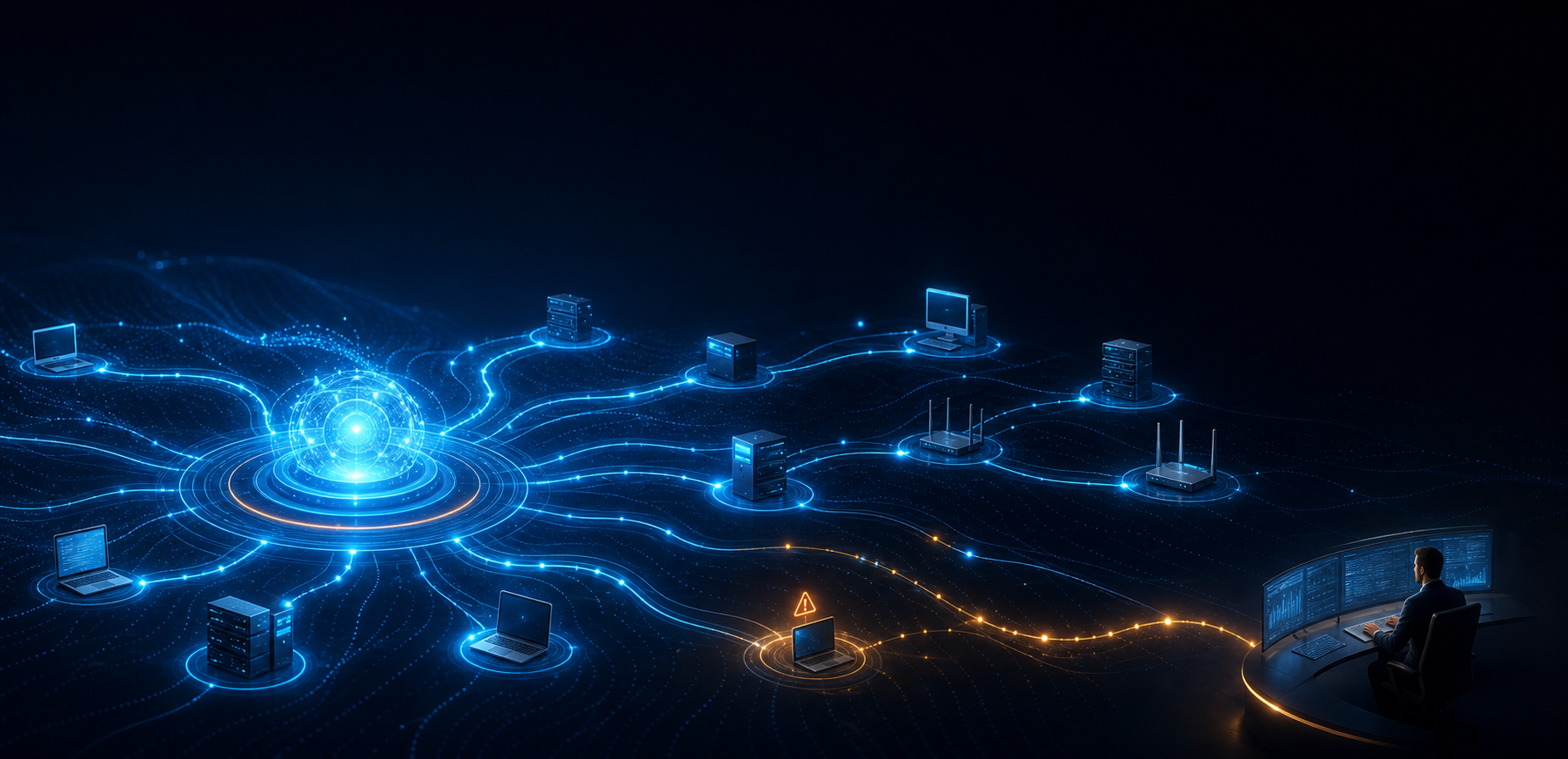
First lineAutomationObserve · diagnose · resolve · escalate
Handles installations, device preparation, routine escalations and work requiring a physical presence.
Standardise to scale
The model works by serving the right customers.
Supported routers, standardised endpoints, approved cloud services and defined service packages create repeatable environments. Repeatable environments produce repeatable problems—and repeatable problems can be automated.
Automation handles repetition. People handle relationships, judgment and exceptions.
Two first-line loops
One intelligence layer.
Across network and ICT.
The same operating philosophy serves both parts of DDTech: automate the repeatable, monitor continuously, attempt safe resolutions and escalate unresolved issues with context.
Engine one
Network + DefinedNexus
- 01Observe
Active monitoring sees live network and service problems.
- 02Diagnose
An AI support agent checks conditions and handles advanced requests.
- 03Self-serve
Customers scan a router, claim it and manage their own WiFi details.
- 04Escalate
Unresolved issues arrive with context for an expert to complete.
Engine two
Managed workplace
- 01Listen
A DDTech agent becomes the first point of contact on each computer.
- 02Resolve
The agent attempts safe fixes for common user and device problems.
- 03Monitor
Zabbix checks cloud and local servers and provides daily feedback.
- 04Escalate
A senior agent receives the unresolved problem and its diagnostic trail.
DD / Client zone
Router identified
Network nameMy Home WiFi
Password••••••••••••
A self-service moment
Scan. Assign.
Connect.
A customer buys a PPPoE package, scans the router, and the client zone assigns the hardware to their account. From there, they control their own SSID and password.
Package→Scan→Configure→Online
The operating advantage
A closed loop for every issue.
Feedback improves the next response ↺